“The Wind Will Carry Us” is a film about a group of city dwellers who travel to a remote village to document an old woman’s death. The protagonist, Behzad, is like a modern-day Odysseus, lost in the vastness of nature. His journey is full of unexpected obstacles and unexpected beauty. Ultimately, he learns that life is fleeting and there is value in slowing down and embracing the present moment.”

CLICK HERE???????_Watch The Wind Will Carry Us 1999 English Subtitles_
Review
In the remote Kurdish village of Siah Darreh, where death is as ubiquitous as the scorching sun that beats down on its inhospitable landscape, a visitor arrives with a mission. This is the premise of Abbas Kiarostami’s 1999 film The Wind Will Carry Us, which is a masterpiece in its own right and deserves more recognition than it has hitherto received.
The protagonist, referred to only as “the engineer,” travels to Siah Darreh with a team of cameramen to document a traditional ceremony known as “the turning of the seasons.” He is aloof and condescending towards the villagers and his crew alike, but beneath his haughty exterior lies a sense of curiosity and anxiety about mortality that drives him ever forward.
As he waits for the ceremony to begin, he becomes embroiled in various mundane activities such as searching for cell phone reception and attempting to bribe an old woman for milk. His interactions with the villagers are marked by an undercurrent of tension that stems from their mutual incomprehension and cultural differences.
The film’s title refers to a poem by Iranian poet Forough Farrokhzad, which states: “The wind will carry us/To each one’s allotted destination/And then it will blow/And we will have been blown away.” This alternate perspective on life and death runs throughout the film and represents one of its central themes.
Kiarostami’s skillful use of long takes, minimal dialogue, and naturalistic performances imbues The Wind Will Carry Us with an air of authenticity that is rare in cinema. There are no heroes or villains in this film; only people going about their lives in an environment that is both harsh and beautiful.
One of the standout performances comes from Behzad Dorani, who plays the engineer. His portrayal of a man caught between his desire for knowledge and his fear of mortality imbues the character with a sense of complexity and humanity. The supporting cast, made up mostly of non-actors from the village, also deliver outstanding performances.
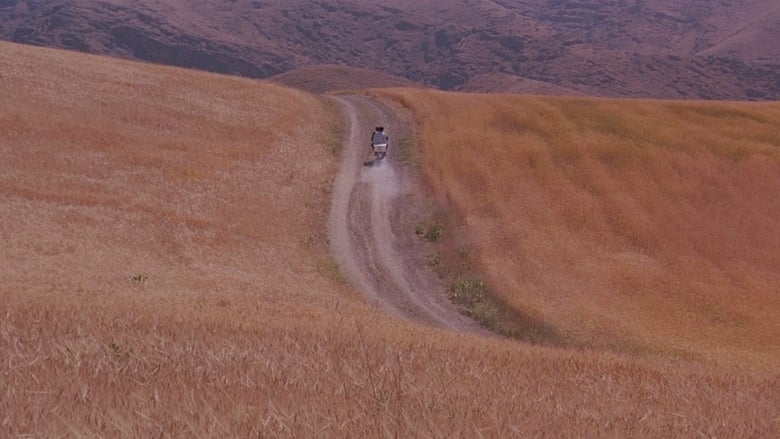
The film’s cinematography is equally impressive, with panoramic shots of the barren landscape that convey a sense of awe and insignificance. The sparse score by Mohammad Reza Darvishi further accentuates the film’s minimalist aesthetic.
Despite its critical acclaim and numerous awards, The Wind Will Carry Us remains a somewhat obscure gem that deserves more recognition. It is a testament to Kiarostami’s skill as a filmmaker that he can take a seemingly mundane premise and elevate it into something profound.
At its core, The Wind Will Carry Us is an exploration of the human condition in all its complexity. It asks us to confront our mortality and consider our place in the world. In this sense, it is not unlike Hemingway’s own works, which similarly grappled with themes of life and death.
As Hemingway once wrote: “The world breaks everyone, and afterward, some are strong at the broken places.” In The Wind Will Carry Us, Kiarostami examines what it means to be broken and how we can find strength amidst our frailty. It is a hauntingly beautiful film that will stay with you long after the credits roll.
Technical Data
- Release : 1999-09-06
- Runtime : 118
- Genre : Drama
- Cast : Behzad Dorani as Behzad, Farzad Sohrabi as Farzad, Noghre Asadi, Roushan Karam Elmi, Bahman Ghobadi
- Crew : Marin Karmitz as Producer, Peyman Yazdanian as Original Music Composer, Bahman Ghobadi as Assistant Director, Abbas Kiarostami as Director, Abbas Kiarostami as Editor
- Revenue : 0
- Budget : 0
- Company : MK2 Films
- Popularity : 9.615
- Summary : Irreverent city engineer Behzad comes to a rural Kurdish village in Iran to keep vigil for a dying relative. In the meanwhile the film follows his efforts to fit in with the local community and how he changes his own attitudes as a result.
- Tagline :
