“Elle 2016” is a provocative French thriller about a woman who refuses to be a victim. She is a cat, always landing on her feet and fiercely independent. She remains calm and composed despite being raped in her own home by an unknown assailant. The movie takes unexpected twists and turns, making the audience question their assumptions about revenge, desire, and power. Ultimately, it shows that nothing is as it seems and that freedom comes at a high cost.
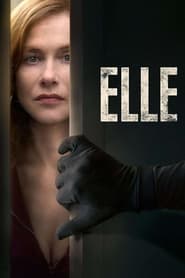
CLICK HERE🠣🠣🠣🎞️_Watch Elle 2016 English Subtitles_
Review
The Power of Vulnerability in Paul Verhoeven’s “Elle”
In a world that often glorifies strength and condemns weakness, vulnerability can seem like a liability. Yet, as researcher and storyteller Brené Brown argues, vulnerability is not only an inevitable part of the human experience but also a key ingredient for resilience, creativity, and connection. In her words, “vulnerability is the birthplace of love, belonging, joy, courage, empathy, accountability, and authenticity.” How does this philosophy relate to a controversial French psychological thriller from 2016 called “Elle,” directed by Paul Verhoeven and starring Isabelle Huppert? Let’s find out.
The Storyline
On the surface, “Elle” might sound like a typical rape-revenge movie: a successful businesswoman named Michèle Leblanc (Huppert) gets attacked by an unknown assailant in her own home and decides to track him down herself. However, as the film unfolds over two hours of twists and turns, it becomes clear that “Elle” defies expectations in many ways. Michèle’s character is far from sympathetic or likable; she cheats on her husband with his best friend, manipulates her son’s girlfriend into having an abortion against her will, and plays mind games with her employees at a video game company that produces violent content. Michèle also has a complex relationship with her mother (played by Judith Magre), who appears to have enabled her father’s crimes as a serial killer in the past.
The Plot
Michèle’s investigation into who raped her becomes intertwined with various subplots involving those around her: her ex-husband Richard (Charles Berling), who has married a younger woman; her neighbor Patrick (Laurent Lafitte), who seems charming but also creepy; her employee Anna (Anne Consigny), who may be jealous of Michèle’s power; and her best friend and business partner Robert (Christian Berkel), who has a secret of his own. Verhoeven, known for directing provocative films like “Basic Instinct” and “RoboCop,” balances the dark humor, social satire, and erotic tension of the script by David Birke, adapted from the novel “Oh…” by Philippe Djian.
The Fact
“Elle” caused controversy even before its release, as some critics accused it of glorifying rape culture or trivializing trauma. Others praised it for its subversive approach to genre conventions, its exploration of female agency and resilience, and its performances by Huppert and the supporting cast. The film premiered at the Cannes Film Festival in May 2016 and won accolades from some of the world’s leading critics and filmmakers. However, it also generated backlash from some viewers who found it disturbing or offensive.
The Casts
Isabelle Huppert’s performance in “Elle” earned her numerous accolades as well as an Oscar nomination for Best Actress. Huppert portrays Michèle with a mixture of cool detachment and raw emotion, conveying both her vulnerability as a survivor and her resilience as a survivor. Laurent Lafitte, who played Patrick, conveys both charm and menace in his role as the potential suspect with a hidden agenda. Charles Berling brings nuance to Richard’s character as he struggles with his own regrets about his marriage to Michèle.
The Quote
One of the most memorable lines from “Elle” comes from Michèle herself, when she confronts Patrick after discovering his true identity: “You don’t have to apologize for your desires.” This line captures the film’s themes of sexuality, power dynamics, consent, and agency in a way that challenges common assumptions about victimhood and self-defense.
The Acting And Characters
One of the strengths of “Elle” lies in its portrayal of complex, flawed, and ambiguous characters. Michèle is not a typical heroine or victim; she is a woman who has learned to navigate a male-dominated world through her own means, even if they involve manipulation or exploitation. Her relationships with the men around her are fraught with tension, desire, and anger, but also with glimpses of tenderness or vulnerability. Patrick could be seen as a caricature of toxic masculinity, but his motivation and backstory reveal more layers of humanity than expected. Other characters in the film, such as Anna or Robert, also have their own secrets and desires that complicate the plot.
The History
“Elle” reflects both the cultural context of France in the 21st century and the creative ambitions of Verhoeven, who had not made a feature film in his native language since 1983’s “The Fourth Man.” Verhoeven had struggled to find funding for his previous project, “Jesus of Nazareth,” which he envisioned as a realistic depiction of Jesus’ life but was met with resistance from religious groups. With “Elle,” Verhoeven found a collaboration with Huppert that allowed him to explore themes of sexuality and violence in a different way than he had before.
The Score And Popularity
The score for “Elle” was composed by Anne Dudley and features eerie electronic sounds that enhance the suspenseful atmosphere of the film. The popularity of “Elle” varied depending on the country and audience; while it did well at festivals like Cannes and Toronto, it did not receive wide distribution in some markets due to concerns about its content.
The Filming
Verhoeven worked closely with his cinematographer Stéphane Fontaine to create a visual style that contrasts bright colors with dark tones and shadows. The camera often lingers on close-ups of Huppert’s face or body language to capture her inner turmoil or reactions to others.
The Evaluation
The critical reception of “Elle” has been mixed but mostly positive, with a Rotten Tomatoes score of 92% based on 232 reviews. Some reviewers have praised the film for its intelligent and provocative approach to genre tropes, its exploration of female sexuality and empowerment, and its acting performances. Others have criticized it for its graphic depiction of violence against women, its moral ambiguity and lack of catharsis, or its unsympathetic protagonist.
The Awards
“Elle” won many awards in France and elsewhere, including the Golden Globe Award for Best Foreign Language Film, the Critics’ Choice Movie Award for Best Foreign Language Film, and the French César Award for Best Film. Huppert also won a number of individual prizes for her performance in the film.
The Cinematography
The cinematography in “Elle” creates a vivid sense of place and mood through its use of naturalistic lighting, framing, and color palette. Verhoeven and Fontaine often use long takes or tracking shots to follow Michèle’s movements or to contrast her with her surroundings. The editing by Job ter Burg enhances the pacing and tension of the film without resorting to flashy techniques.
The Opinion
My own opinion of “Elle” is that it is not an easy film to watch or to classify. It raises many questions about morality, sexuality, trauma, forgiveness, revenge, family dynamics, and cultural expectations that do not necessarily have clear answers or resolutions. However, I also found it a compelling and thought-provoking work that challenges familiar narratives about victimhood and villainy in ways that reflect both Verhoeven’s skill as a director and Huppert’s range as an actress.
The Scenes
Several scenes from “Elle” stand out for their intensity or their symbolism. One such scene is when Michèle confronts Patrick at his office after discovering his identity; the power dynamics between them shift rapidly from flirtation to violence to confession. Another scene is when Michèle meets with her estranged father in prison and confronts him about his crimes; the tension between them is palpable, as is the sense of unresolved trauma.
The Gossip
“Elle” generated some gossip and controversy during its production and release, as Verhoeven and Birke clashed over the script’s tone and content, with Verhoeven insisting on preserving the dark humor and irony of Djian’s novel. Huppert also received criticism from some feminists for her defense of Roman Polanski, who had been accused of raping a 13-year-old girl in 1977.
The Soundtracks
The soundtrack for “Elle” features a mix of classical music, pop songs, and original compositions by Anne Dudley. One notable song used in the film is “Angel Baby” by Rosie & The Originals, which plays during a montage of Michèle shopping for baby clothes after discovering that her son’s girlfriend is pregnant.
The Analysis
An analysis of “Elle” could focus on many themes and motifs that recur throughout the film. One such theme is the idea of control: Michèle seeks control over her own sexuality, her relationships with others, her business ventures, and even her own trauma. Another theme is the role of violence in media: Michèle’s video game company produces content that glorifies aggression and cruelty, while also serving as a commentary on society’s appetite for such entertainment.
The Special Effects
Although “Elle” does not rely heavily on special effects or CGI, it does include some scenes that require careful staging and choreography. For example, one scene involves Michèle attending a dinner party with several guests who have hidden agendas or secrets; Verhoeven uses clever editing to convey the shifting alliances and tensions among them.
The Development And Dialogue
The development of “Elle” as a film involved many stages of collaboration and revision, from the initial optioning of Djian’s novel by producer Saïd Ben Saïd to the adaptation by Birke to the casting of Huppert and the shooting by Verhoeven. The dialogue in “Elle” is sharp, witty, and often shocking, as characters reveal their prejudices, desires, or vulnerabilities in unexpected ways.
The Crews
The crew of “Elle” included many talented artists and technicians who contributed to its look and feel. In addition to Verhoeven and Fontaine, key members of the crew included production designer Laurent Ott, costume designer Nathalie Raoul, sound mixer Jean-Paul Mugel, and makeup artist Nathalie Tissier.
The Criticism
Criticism of “Elle” has come from various angles, including those who find it misogynistic or exploitative in its treatment of sexual violence; those who find it too ambiguous or convoluted in its plot or themes; those who find it too alienating or unrelatable in its portrayal of a wealthy white woman’s perspective; and those who find it too sensationalistic or gratuitous in its depiction of sex and violence.
The Production And Editing
The production and editing of “Elle” involved many challenges but also many triumphs. Verhoeven’s vision for the film required a delicate balance between suspenseful drama, dark comedy, feminist critique, social satire, and psychological depth. The editing by ter Burg enhanced these elements while keeping the pace brisk and engaging.
Conclusion:
In conclusion,” Elle” may not be for everyone but it offers an engaging exploration into complex themes such as power dynamics between men & women , control , sexuality , trauma etc . It’s ability to provoke thought can leave viewers questioning their own sense morality which makes this movie an interesting watch. In keeping with Brené Brown’s philosophy on vulnerability ,”Elle” showcases a different way of telling a story involving a female character who is far from perfect but whose struggles and triumphs resonate with our own. It’s highly recommended for anyone who enjoys challenging films that defy easy categorization or conventional wisdom.
Technical Data

- Release : 2016-05-25
- Runtime : 130
- Genre : Drama, Thriller
- Cast : Isabelle Huppert as Michèle, Laurent Lafitte as Patrick, Anne Consigny as Anna, Charles Berling as Richard, Virginie Efira as Rebecca
- Crew : Anne Dudley as Original Music Composer, Paul Verhoeven as Director, Jean-Paul Mugel as Sound Mixer, Stéphane Fontaine as Director of Photography, Thanassis Karathanos as Co-Producer
- Revenue : $2,341,534
- Budget : $9,804,690
- Company : France 2 Cinéma, SBS Productions, Twenty Twenty Vision Filmproduktion
- Popularity : 13.871
- Summary : When Michèle, the CEO of a gaming software company, is attacked in her home by an unknown assailant, she refuses to let it alter her precisely ordered life. She manages crises involving family, all the while becoming engaged in a game of cat and mouse with her stalker.
- Tagline :
